

Understanding certification systems, cost structures, and regulatory context is critical for successful implementation.
Biophilic Design for the UK Built Environment
Research-led guidance for architects, planners, and developers navigating sustainability, wellbeing, and devolved UK regulatory frameworks. Covering standards, performance, and implementation across offices, schools, healthcare, and retrofit projects.
Independent. Evidence-based. UK-focused. Globally informed. Our guidance supports concept design, specification, and compliance decisions for UK projects.
Biophilic Innovation Fundamentals
Understanding biophilic design requires clarity at the conceptual level before moving into implementation.Our foundational guides define the science, structure, and measurable outcomes behind nature-integrated architecture.
What Is Biophilic Design?
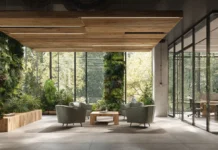
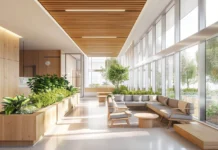
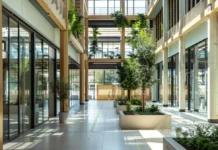
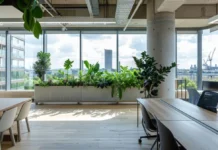
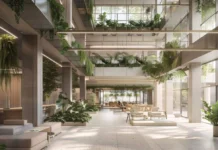
Biophilic design is a research-led approach that strengthens the human connection to nature within built spaces. It integrates natural elements (including greenery, plants, daylight, views, and nature-referencing materials) to support measurable outcomes in wellness, comfort, and performance. Done well, it balances organic cues with environmental control, creating environments that feel restorative, visually coherent, and grounded in evidence rather than purely aesthetics.The 14 Patterns of Biophilic Design
A structured breakdown of “Nature in the Space,” “Natural Analogues,” and “Nature of the Space”, and how they translate into architecture. In practice, biophilic strategies translate into daylight, views, material choices (e.g., wood, textures), and nature-based interventions that can support biodiversity and planning outcomes.The Science Behind Biophilia
How neuroscience, environmental psychology, and stress physiology support nature-integrated environments. The focus is on measurable impacts on stress, cognition, psychological wellbeing, and indoor air quality, grounded in research. Where relevant, we clarify what is strongly supported, what is context-dependent, and what requires careful interpretation.Benefits of Biophilic Design (Backed by Research)
Measured impacts on stress reduction, cognitive clarity, productivity, and wellbeing. We distinguish between correlation, plausible mechanisms, and claims that require project-specific verification.These guides establish the conceptual and scientific foundations that inform all sector-specific and UK-focused content.

Sector Applications
Biophilic strategies must respond to operational realities. Implementation differs across sectors.
Biophilic Design in the UK
Biophilic design is universal in principle, but UK delivery is shaped by regulation by country, climate, and a retrofit-heavy building stock.
Regulatory drivers
- BREEAM alignment
- WELL adoption in UK workplaces
- Biodiversity Net Gain requirements (England)
- “Building Regulations (England: Approved Docs L, O, F; devolved equivalents elsewhere)
Practical constraints
- Urban density and constrained sites
- Low winter daylight conditions
- Retrofit, heritage, and operational constraints

Frameworks, Cost & Standards
Case Studies
International precedents illustrating different levels of biophilic integration. We extract lessons and explain how they may (or may not) translate to UK climate and regulation.
Our Approach
Biophilic Innovations is:
- Independent
- Research-led
- UK-focused, globally informed
- Regulation-aware
- Sector-contextual
- Evidence-based synthesis
- Standards cross-checking
- Clear conceptual boundaries
- UK planning realities
Learn more about our Methodology and Editorial Policy. We do not treat biophilic features as a substitute for ventilation, thermal comfort, or acoustic performance.

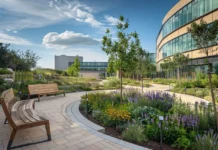
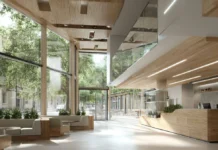
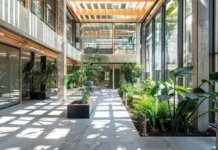
Biophilic design includes strategies that bring the qualities of the outdoors into buildings: sunlight and daylight optimisation, structured greenery, garden or courtyard access, and even water elements where appropriate. It also uses natural materials such as stone and timber, plus spatial patterns that support harmony and tranquillity (for example, prospect and refuge). These approaches build on environmental psychology and frameworks advanced by thinkers such as Stephen Kellert.
Biophilic design is not a standalone UK regulation, but many strategies align with BREEAM Health & Wellbeing criteria and can complement Biodiversity Net Gain through landscape-led design (e.g., courtyards, gardens, and outdoor habitat improvements). Practical delivery also intersects with Building Regulations such as Part L (energy), Part O (overheating) and Part F (ventilation), especially where sunlight, glazing, and natural airflow are part of the design.
Sustainable design focuses primarily on reducing environmental impact (energy, carbon, water, materials). Biophilic design focuses on human response to nature and the experience of place, supporting calm, harmony, and wellbeing through elements such as sunlight, greenery, water, natural materials (e.g., stone), and restorative spatial conditions. Many projects integrate both, but they are optimised for different outcomes.
Research suggests that access to daylight, views, and nature cues can support attention restoration and stress reduction for many people. In workplaces, these conditions may contribute to improved perceived focus and comfort, though outcomes vary by context and should be evaluated through post-occupancy feedback and performance indicators rather than assumed.
Yes. In the UK’s retrofit-heavy building stock, biophilic upgrades often focus on achievable interventions: improving daylight and sunlight access, adding indoor planting or small courtyard gardens, enhancing connection to outdoors via terraces, and specifying natural materials like timber or stone. Where possible, landscape improvements and water-sensitive design can also contribute to a calmer, more restorative environment while working within heritage and regulatory constraints.
Costs vary by scale, constraints, and operational requirements. Many strategies can be cost-effective when planned early (e.g., daylight planning with glare/overheating control, material specification, and access to outdoor space). Higher-cost features such as large living walls or water installations are optional and should be evaluated against project goals, maintenance capacity, hygiene requirements, and lifecycle costs.