
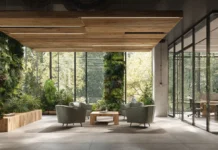



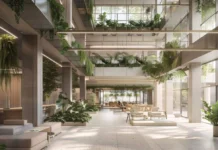

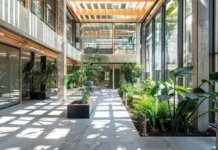
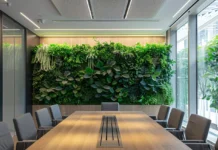
Biophilic design is often discussed as a concept. Its value becomes clearer when you examine built projects that integrate nature as a core workplace system rather than a visual theme.
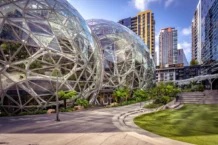
Amazon’s Spheres in Seattle are a high-profile example of large-scale biophilic integration in a corporate setting. Completed in 2018 as part of Amazon’s urban campus, the Spheres are three glass domes housing more than 40,000 plants from over 30 countries. The space functions as a collaborative workplace designed around biophilic patterns.
The Spheres are widely discussed as supporting collaboration and employee experience; publicly available evidence is stronger for self-reported outcomes and brand/talent impact than for quantified productivity or ROI.
This case study examines architecture, pattern implementation, outcomes and evidence limits, and what is transferable to UK workplaces.
Quick summary
Amazon’s Spheres are three glass conservatory domes built as an alternative workplace space with extensive greenery, daylight, prospect and refuge zones, and controlled microclimates. The project demonstrates that layered biophilic patterns can improve staff experience and perceived creativity, while requiring significant operational systems for humidity control, plant care, and glazing performance.
Publicly available evidence is stronger for employee-reported outcomes and branding impact than for quantified productivity metrics. UK workplaces can adapt the principles through distributed planting, daylight and glare control, and refuge spaces, while managing overheating, ventilation, and maintenance constraints.
Project overview
- Organisation: Amazon
- Lead architect: NBBJ
- Location: Seattle, Washington
- Completion: 2018
- Primary typology: indoor conservatory workplace and collaboration space
Design intent
The Spheres were conceived as an alternative workspace to conventional office floors. The intent was to provide restorative collaboration environments, support creativity, and reinforce Amazon’s identity as an innovation-focused company.
Nature-integrated collaborative space improves perceived innovation culture.
Architectural strategy and biophilic patterns
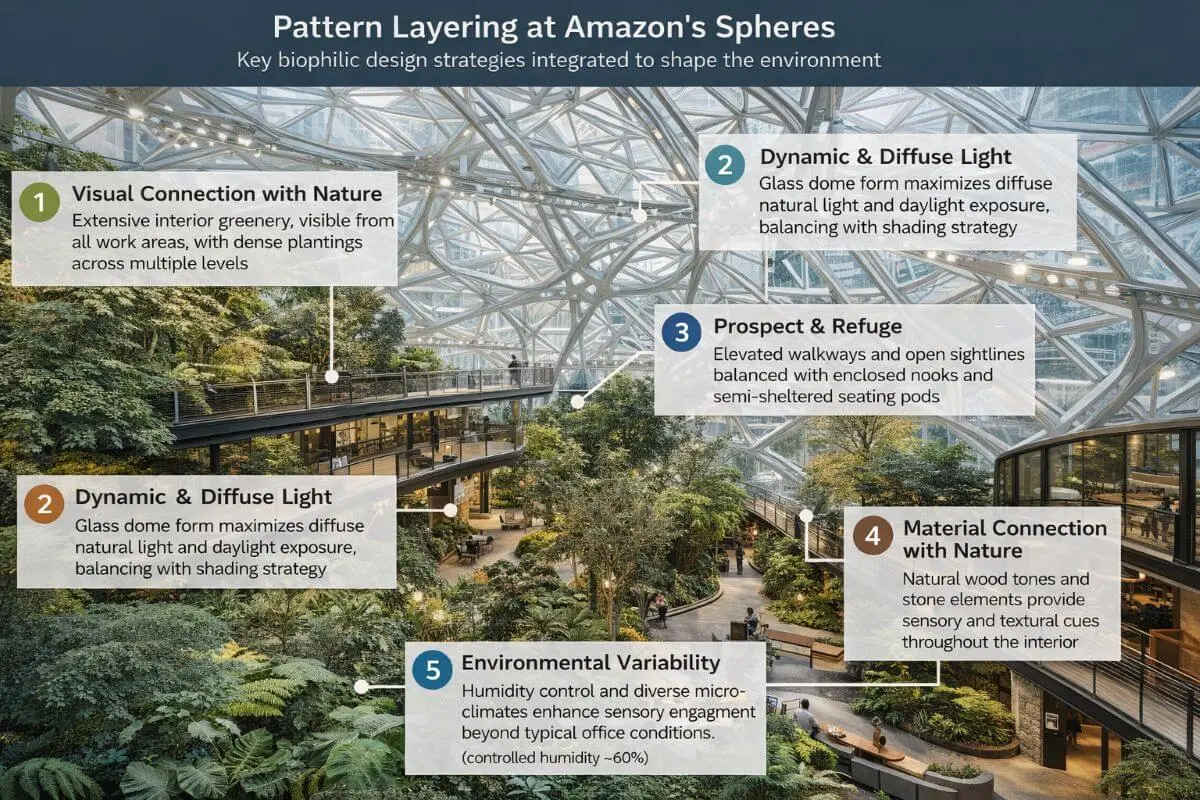
The Spheres integrate multiple biophilic layers rather than relying on isolated features. The project combines direct nature exposure, daylight strategy, spatial psychology, material cues, and environmental variability.
1) Visual connection with nature
The interior contains extensive greenery across multiple levels. Continuous visual exposure to vegetation is the dominant experience of the space.
Implementation features include dense planting zones, varied species, and sightlines that keep greenery in view across circulation and seating areas.
2) Dynamic and diffuse light
The glass dome form maximises daylight penetration and creates diffuse lighting conditions. In Seattle’s climate, glazing performance must balance daylight, glare, and thermal stability.
Natural daylight integration is discussed in relation to support cognitive clarity through circadian alignment and visual comfort.
Daylight strategy must be designed as a system. More daylight without glare and overheating control reduces comfort and usability.
3) Prospect and refuge
Interior layout combines elevated walkways and open sightlines with enclosed meeting pods and semi-private seating. This creates prospect and refuge balance.
Prospect and refuge balance increases perceived safety and supports focused work and restoration.
4) Material connection with nature
Interior finishes incorporate wood textures, organic forms, and natural material cues. These choices reduce corporate monotony and support sensory variety.
Material cues influence perceived comfort through texture, warmth, and familiarity.
5) Environmental variability and microclimates
The Spheres maintain higher humidity than typical offices and include varied microclimates. This environmental variability mimics greenhouse conditions more than standard workplace HVAC.
Environmental variability increases sensory engagement.
Environmental variability also increases operational demand. Humidity control, plant health, and comfort management require monitoring and maintenance.
Outcomes and evidence limitations
Amazon has not publicly released detailed quantitative productivity metrics attributable to the Spheres. Publicly reported outcomes are therefore more reliable for employee experience and organisational narrative than for hard productivity deltas.
Employee-reported experience commonly includes higher satisfaction, perceived creativity, and strong demand for access to the space. Internal survey findings are often referenced in public discussion, but the underlying datasets are not typically available for independent validation.
Staff experience data strengthens perceived value, even when productivity metrics are not published.
Psychological and cognitive mechanisms
The Spheres create a work environment with high sensory variety and soft fascination through plant variation. These conditions align with Attention Restoration Theory, which links coherent natural complexity to reduced cognitive fatigue.
Soft fascination reduces cognitive fatigue and supports sustained attention.
Employer branding and talent strategy
The Spheres operate as corporate identity infrastructure. They function as a public architectural statement and a talent attraction asset.
Health-focused workplace design strengthens employer brand perception.
These benefits are real but indirect. Attribution to a single built feature is difficult, so the strongest claims are about perception, positioning, and narrative consistency.
Economic and operational considerations
Large-scale biophilic installations require structural engineering, high-performance glazing, advanced environmental control systems, and ongoing horticultural maintenance.
Biophilic performance at this scale requires operational systems as much as architectural form.
For many organisations, similar benefits can be pursued through smaller, distributed strategies that increase everyday exposure rather than concentrating nature into a single destination space.
Limitations and criticism
Common critiques include high capital cost, perceived exclusivity, and limited daily access for all employees. A central biophilic zone can become a brand asset but may not deliver equitable benefit across the whole workforce.
Distributed nature exposure increases equity of access across staff groups.
What UK workplaces can learn from the Spheres
UK workplaces operate under different climate and compliance conditions. Design teams must manage overheating risk, ventilation performance, glare control, and maintenance capacity alongside wellbeing goals.
UK transfer requires adaptation rather than replication.
Transferable principles include:
- Visible greenery and nature views distributed across daily work areas
- Daylight optimisation with glare control and thermal performance management
- Prospect and refuge planning for collaboration and restoration
- Material and texture cues that increase sensory variety without increasing maintenance burden
- Operational planning for irrigation, plant health, and indoor environmental quality
Lessons for implementation
- Layer patterns: biophilic outcomes improve when light, greenery, space planning, materials, and variability reinforce each other.
- Align with culture: the strongest workplaces connect design intent to how people work and collaborate.
- Plan for maintenance: long-term horticultural and environmental monitoring sustains credibility.
- Design for access: distributed interventions support more consistent benefit than destination-only spaces.
Key takeaways
- Layered biophilic patterns create stronger impact than plants alone.
- Daylight and greenery improve perceived workplace quality when thermal and glare performance are controlled.
- Microclimates increase operational complexity through humidity control and horticultural maintenance.
- Employee-reported outcomes are more visible than published productivity metrics.
- UK workplaces can adopt the principles through scalable, distributed interventions that fit climate and compliance constraints.
Amazon’s Spheres FAQs
What makes Amazon’s Spheres a biophilic workplace case study?
They combine extensive greenery, diffuse daylight, prospect and refuge spaces, natural material cues, and controlled microclimates as an integrated workplace environment.
Did Amazon publish measurable productivity results from the Spheres?
Amazon has not publicly released detailed productivity metrics attributable to the Spheres. Evidence is stronger for employee-reported experience and employer branding impact than quantified productivity deltas.
Why does microclimate control matter in biophilic workplaces?
Humidity, airflow, and temperature stability affect plant health and human comfort. Microclimates increase operational complexity and require monitoring, maintenance, and energy management.
Are large biophilic destination spaces effective for all staff?
They can improve experience for users, but centralised spaces can limit daily access. Distributed biophilic features across the workplace often improve equity of benefit.
What can UK workplaces borrow from the Spheres?
UK projects can adopt distributed greenery, daylight optimisation with glare control, prospect and refuge planning, and material texture cues, while aligning with overheating, ventilation, and maintenance constraints.
Conclusion
Amazon’s Spheres are a prominent example of large-scale biophilic integration in a corporate setting. By layering visual nature, daylight strategy, spatial psychology, material cues, and microclimate variability, the project demonstrates how workplace architecture can align space with human cognitive and wellbeing needs.
Biophilic design is not symbolic greenery. It is performance architecture supported by operational systems. And this case study shows that biophilic design has a place in offices.