
Biophilic design, sustainable design, and regenerative design are often used interchangeably. They overlap in practice, but they are not the same framework. Each one optimises a different outcome, and that changes how you design, how you measure success, and what evidence you need at handover and in operation.
These frameworks present different solutions to challenges such as climate change, resource depletion, and declining environmental quality in cities. Designers and architects must align framework selection with sustainability goals, organisational responsibility, and long-term resilience targets.
These frameworks overlap in practice, but effective integration depends on clarity of purpose and measurement. But they differ by:
- Primary objective
- Measurement criteria
- Scale of impact
- Time horizon and evidence burden
Biophilic design strengthens the human nature relationship inside buildings and places.
Sustainable design reduces environmental impact across energy, carbon, water, materials, and waste. Regenerative design restores ecosystems and aims for net-positive contribution over time.
In the UK, these frameworks sit alongside building compliance and planning requirements. Building Regulations shape energy, ventilation, and overheating design. Planning and site constraints shape ecology and landscape decisions. BREEAM is a common delivery and assurance mechanism across many project types.
Quick summary
Sustainable design reduces environmental harm by improving energy, carbon, water, materials, and waste performance. Biophilic design improves human outcomes by increasing meaningful exposure to nature through daylight, views, materials, and spatial patterns, measured through indoor environmental quality and occupant experience.
Regenerative design aims for ecosystem restoration and net-positive performance through energy, water, biodiversity, and place-based systems. In the UK, Building Regulations and planning constraints shape what is feasible, while frameworks such as BREEAM often provide the delivery structure.

What is sustainable design?
Definition
Sustainable design minimises negative environmental impact by reducing energy use, carbon emissions, water demand, waste, and resource consumption across the building lifecycle.
Sustainable design reduces environmental footprint and often prioritises energy conservation and water conservation as primary performance drivers.
Primary goals
- Energy efficiency and reduced energy consumption
- Operational and embodied carbon reduction
- Water efficiency and demand reduction
- Material lifecycle optimisation and reduced waste
- Lower emissions and improved resource efficiency
How it is measured in practice
- Energy modelling and compliance evidence (UK examples include Part L pathways)
- Operational performance tracking (energy use, water use, waste)
- Carbon accounting (operational and embodied)
- Verification through green building certifications (UK example: BREEAM, alongside other standards)
Sustainable strategies increasingly incorporate circular material flows to reduce waste and extend lifecycle value. Performance is often evaluated through energy use intensity, emissions reporting, and resource efficiency benchmark.
Core question
How do we reduce harm?

What is biophilic design?
Definition
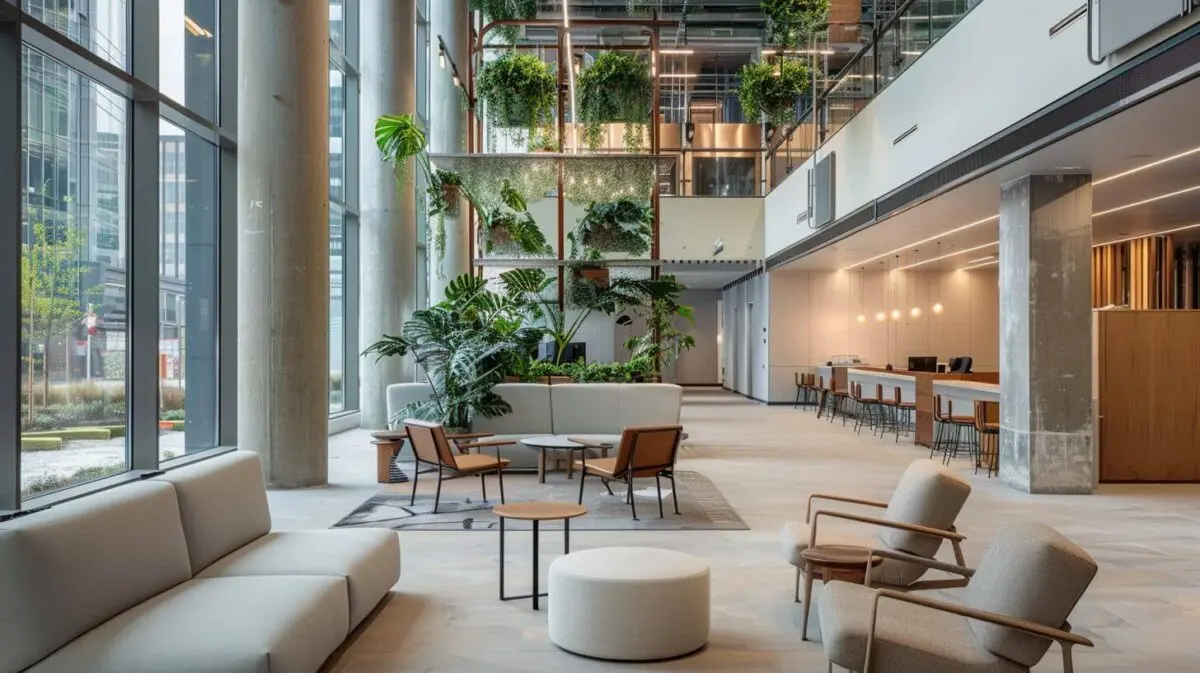
Biophilic design integrates natural systems, materials, and spatial conditions into buildings to improve human health, cognitive performance, and wellbeing. It focuses on the quality of the occupant experience and the measurable effects of indoor environments on people.
Biophilic design enhances human physiological wellbeing and supports long-term wellness outcomes. These environments can produce restorative cognitive and emotional effects when daylight, views, and spatial patterns are well designed.
Biophilia supports restorative experiences that reduce stress and improve productivity in offices, healthcare environments, and education settings. Research in environmental psychology links natural light, ventilation, and material authenticity to improved well-being and cognitive endurance.
Core characteristics
- Daylighting and glare control that support visual comfort
- Views to greenery and access to outdoor or planted spaces
- Natural materials such as timber and stone, used with intention
- Spatial patterns such as prospect and refuge that affect perceived safety and focus
- Nature-inspired patterning, including fractal geometry
How it is measured in practice
- Indoor environmental quality measures (air quality, thermal comfort, acoustics, light)
- Occupant satisfaction and comfort surveys
- Post-occupancy evaluation and operational feedback loops
- Health-oriented frameworks where relevant (example: WELL features and policies)
Core question
How can architecture align with human biology?
What is regenerative design?
Definition
Regenerative design goes beyond minimising harm. It aims to restore ecological systems and create net-positive outcomes over time by treating buildings as part of living ecosystems.
Regenerative design adopts a holistic view of buildings as adaptive systems embedded within local ecology and communities to restore ecological systems. It promotes adaptive and restorative systems that respond to local climate, soil, water, and biodiversity conditions. It emphasises long-term ecological resilience and community integration.
Core characteristics
- Net-positive or surplus energy strategies where feasible
- Water cycle regeneration through capture, reuse, and infiltration
- Biodiversity enhancement and habitat creation
- Soil health improvement and landscape restoration
- Systems thinking that connects building, site, ecology, and community outcomes
How it is measured in practice
- Energy and water balance demonstrated in operation
- Biodiversity uplift evidenced through site ecology strategy and monitoring
- Place-based performance metrics tied to local constraints and opportunities
Core question
How can buildings actively improve their environment?
Structural comparison
| Dimension | Sustainable | Biophilic | Regenerative |
|---|---|---|---|
| Primary focus | Environmental efficiency | Human wellbeing | Ecological restoration |
| Core question | Reduce harm | Support human biology | Restore ecosystems |
| Typical measurement | Carbon, energy, water, waste | IEQ, comfort, cognition, satisfaction | Biodiversity, net-positive systems |
| Scale | Building and portfolio | Occupant and space | Site and ecosystem |
| Time horizon | Long-term efficiency | Immediate and ongoing experience | Long-term renewal |
Where they overlap
Where strategies align, daylighting and landscape design can create synergy between energy reduction, biodiversity enhancement, and occupant wellbeing. Integrated projects aim for harmony between environmental efficiency, human experience, and ecological renewal.
Sustainable and biophilic
- Daylighting strategy supports sustainability and biophilia by reducing lighting energy and improving visual comfort.
- Natural ventilation supports sustainability and biophilia by reducing mechanical demand and improving perceived freshness when outdoor air quality allows.
Biophilic and regenerative
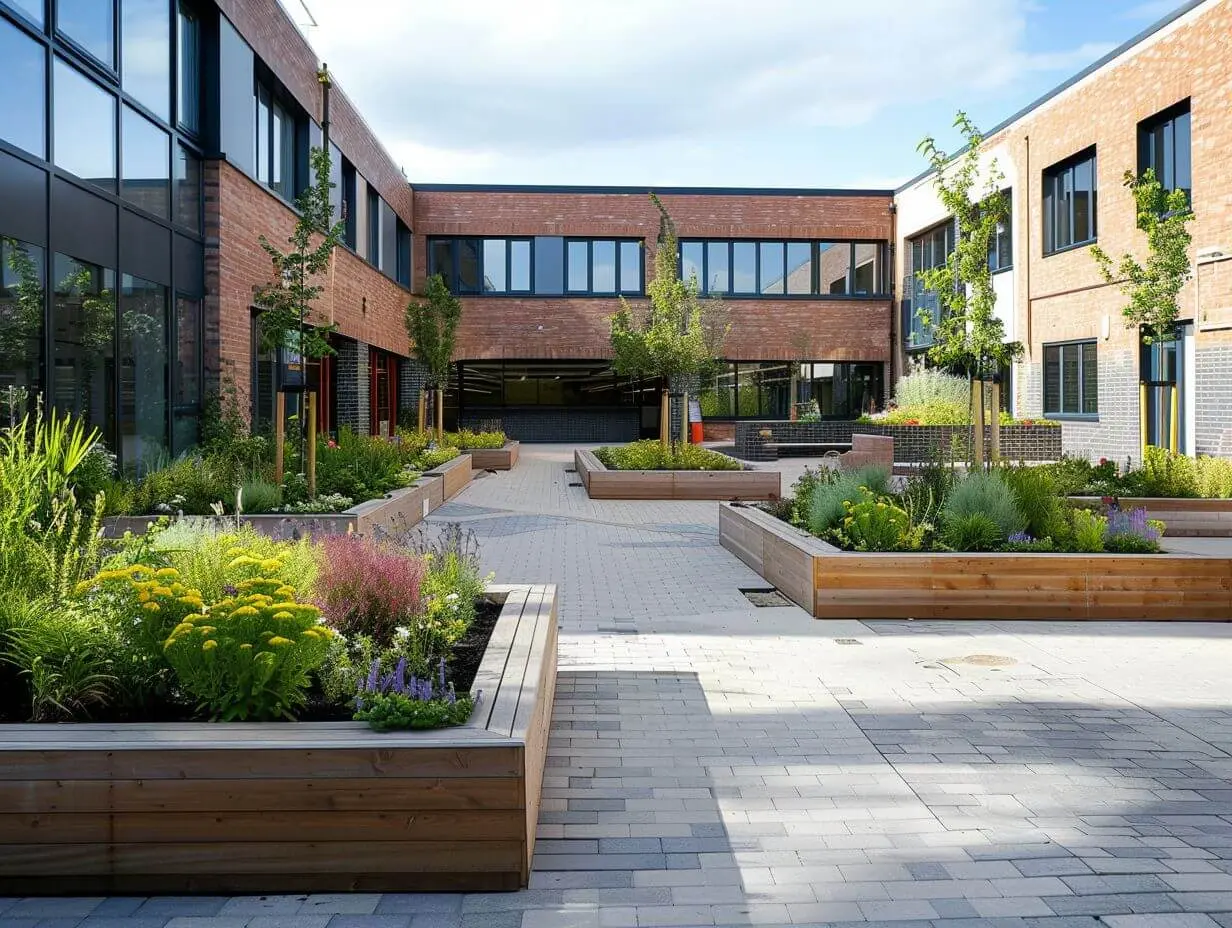
- School gardens support biophilic and regenerative goals by improving student experience while improving soil quality and local ecology.
- Green roofs support biophilic and regenerative goals by increasing biodiversity and providing visible nature exposure.
Sustainable and regenerative
- Renewable energy systems support sustainable and regenerative goals by reducing emissions and enabling surplus generation where feasible.
- Water efficiency measures can evolve into regenerative strategies when projects retain and reuse water to support local hydrology.
These intersections demonstrate synergy between human-centred design, environmental conservation, and ecosystem restoration.

Implementation differences in practice
Example: an office building
Sustainable approach
- High-efficiency HVAC and controls that reduce energy use
- LED lighting with effective zoning and daylight response
- Water-efficient fixtures and leak detection
Biophilic approach
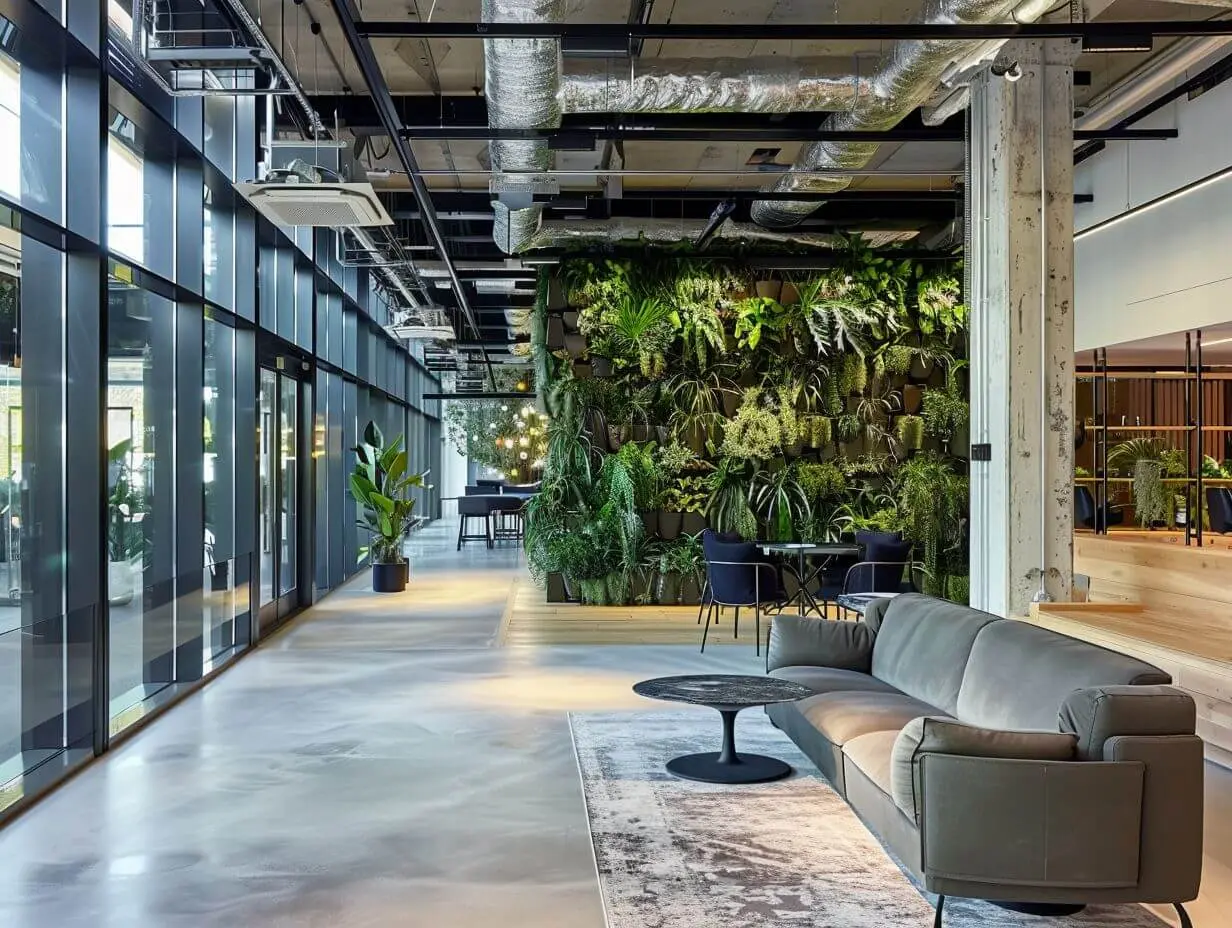
- Visual access to nature through views and planting strategy
- Natural materials and tactile finishes that improve sensory quality
- Daylight planning that supports comfort, not just brightness
Regenerative approach
- Net-positive energy strategy where site and budget allow
- Roof habitat or landscape systems that increase biodiversity
- Rainwater capture and reuse that supports water cycle performance
Why the distinction matters
Design priority determines framework selection.
- If the goal is carbon neutrality, prioritise sustainable design and evidence pathways tied to carbon, energy, and water performance.
- If the goal is employee performance or occupant outcomes, prioritise biophilic design and evidence pathways tied to indoor environmental quality and experience.
- If the goal is ecosystem restoration and long-term resilience, prioritise regenerative design and evidence pathways tied to net-positive systems and ecology.
Clarity reduces goal drift and improves decisions during planning, procurement, and operation.
Integrated design: the future direction
Leading projects adopt a holistic approach that integrates sustainable efficiency, biophilic wellness strategies, and regenerative systems thinking. This integration strengthens environmental performance while maintaining harmony between human needs and ecological function.
- Sustainable efficiency as the baseline
- Biophilic strategies to improve occupant experience
- Regenerative systems where the site and mission support net-positive performance
Successful projects treat these approaches as layered integration rather than competing strategies.
Key takeaways
- Sustainable design reduces environmental footprint through energy, carbon, water, materials, and waste metrics.
- Biophilic design improves wellbeing and cognitive performance by strengthening connection to nature in occupied spaces.
- Regenerative design restores ecosystems through net-positive energy and water strategies and biodiversity uplift.
- Design objective determines measurement method, evidence burden, and operational accountability.
- In the UK, Building Regulations and planning constraints shape how all three frameworks are delivered.
FAQs
What is the main difference between sustainable and regenerative design?
Sustainable design reduces harm through efficiency and impact reduction. Regenerative design aims to restore ecosystems and deliver net-positive outcomes in energy, water, and biodiversity where feasible.
Is biophilic design the same as sustainable design?
No. Biophilic design focuses on human outcomes and connection to nature inside spaces. Sustainable design focuses on environmental impact reduction across energy, carbon, water, materials, and waste.
How do you measure biophilic design outcomes?
Biophilic outcomes are evidenced through indoor environmental quality measures, occupant satisfaction, post-occupancy evaluation, and experience-based indicators such as comfort and attention recovery.
Can one project use all three frameworks?
Yes. Many projects combine sustainable efficiency, biophilic strategies for occupant experience, and regenerative elements where site constraints and operational capacity support net-positive goals.
Which approach is most relevant in the UK?
All three are used in the UK, but delivery is shaped by Building Regulations, planning constraints, and common assurance frameworks such as BREEAM. The right approach depends on your KPI and evidence pathway.
Conclusion
Sustainable design reduces environmental harm. Biophilic design improves human wellbeing. Regenerative design restores ecological systems.
Buildings can integrate all three, but the strategy must start with a clear primary goal, a clear measurement method, and an evidence plan that holds up in operation.
For readers asking about exploring Biodiversity Net Gain integration, the linked guide goes deeper.