




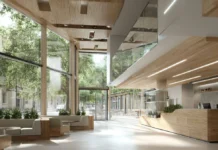
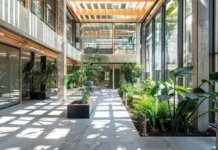

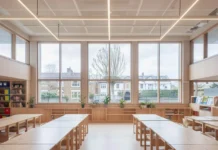
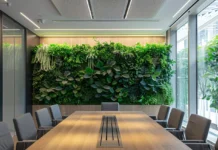

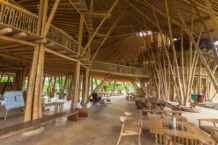
Biophilic design in schools integrates daylight, nature views, vegetation, spatial psychology, and controlled environmental variability into educational architecture to improve learning conditions and long-term student wellness. Educational buildings are not neutral containers.
The goal is not decorative greenery. The goal is measurable support for attention, comfort, emotional regulation, and staff experience. School architecture shapes atmosphere, engagement, and productivity over time.
Children spend around 6 to 8 hours per day in school environments. The physical environment influences:
- Attention capacity and task completion
- Memory retention and cognitive endurance
- Emotional regulation and behaviour
- Absenteeism rates
- Teacher satisfaction and retention
School building environment influences student academic performance.
Biophilic design addresses the gap between human developmental needs and indoor learning settings that often prioritise efficiency over environmental quality.
Quick summary
Biophilic school design improves learning environments by integrating daylight, nature views, indoor environmental quality, acoustic comfort, outdoor learning access, and supportive spatial layouts. Research links nature exposure to attention restoration and stress reduction, while daylight and ventilation improvements are associated with better attendance and cognitive performance.
In the UK, delivery must align with BREEAM Schools, Building Bulletin guidance such as BB101 ventilation expectations, Building Regulations for energy and overheating risk, and safeguarding constraints. Schools can track impact through attendance, behaviour incidents, attainment trends, staff retention, and student wellbeing surveys.

Why learning environments matter
Educational performance depends on curriculum, teacher quality, and socioeconomic context. The physical environment is often overlooked even though it directly affects attention, stress, and comfort.
Poor school environments commonly include insufficient daylight, poor air quality, acoustic stress, visual monotony, and limited outdoor access. These conditions increase cognitive fatigue and behavioural challenges.
Indoor environmental quality influences attention and behaviour. Architecture influences cognitive engagement, classroom atmosphere, and long-term academic productivity.
UK implementation considerations
Biophilic design in UK schools sits inside a structured regulatory and delivery environment. Common influences include BREEAM Schools and Building Bulletin guidance, alongside Building Regulations affecting energy, ventilation, and overheating risk.
BREEAM Schools framework reinforces biophilic environmental strategies.
Ventilation expectations in many UK school projects reference Building Bulletin 101 and related guidance. Natural ventilation strategies must meet airflow expectations while managing summer overheating risk, especially as heat events become more common.
Northern latitude daylight variation affects classroom circadian alignment. Short winter days and overcast skies mean daylight optimisation should be paired with lighting strategies that support alertness and visual comfort. The goal is usable daylight and stable learning conditions, not maximal glazing.
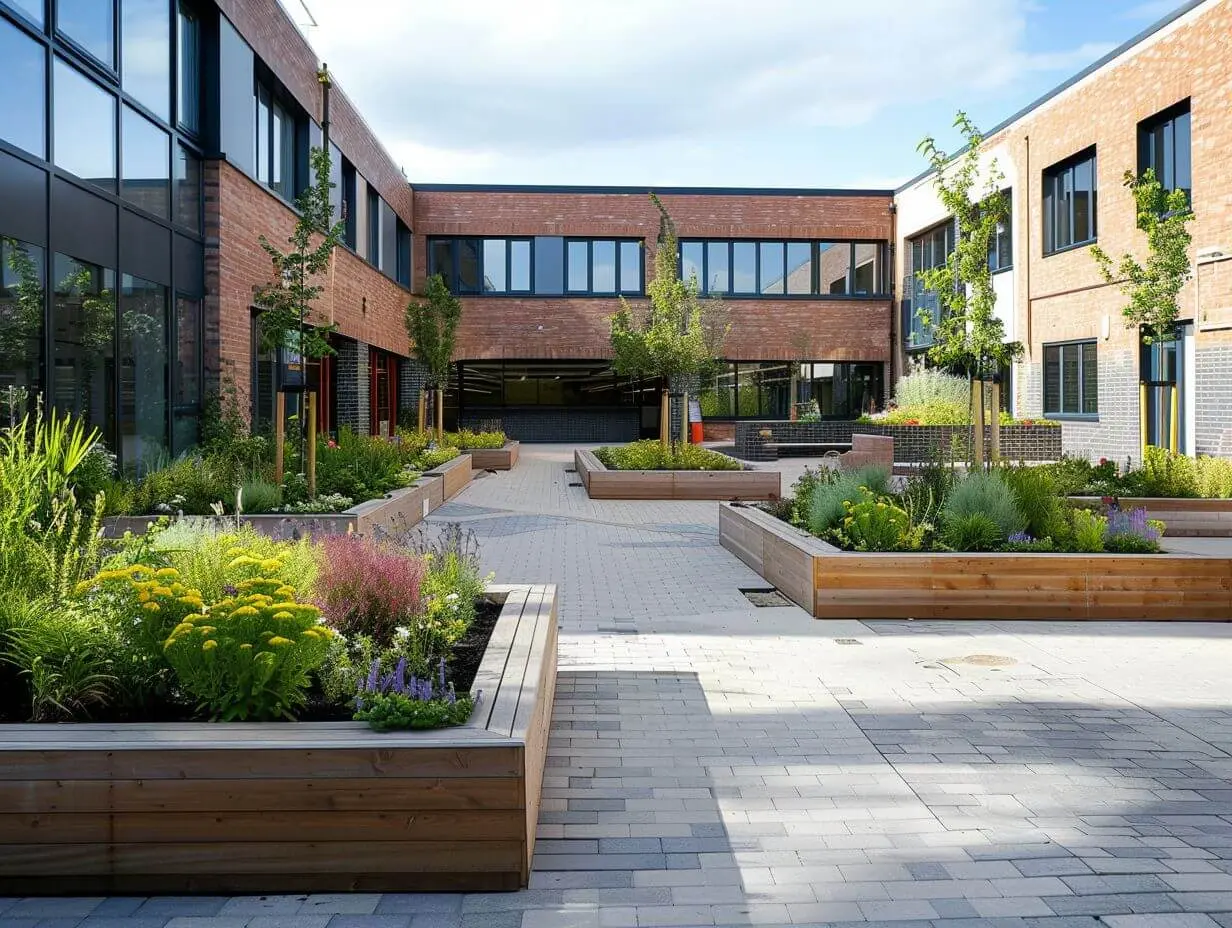
Urban playground constraints also affect delivery. Many schools have limited outdoor space, so nature connection often relies on courtyards, pocket planting, tree views, green walls, or rooftop gardens where feasible and safe. Where space is constrained, biodiversity can be supported through green walls, rooftop gardens, and pocket planting areas designed for safe access and maintenance.

The science linking nature and learning
Attention restoration and focus
Directed attention is required for reading comprehension, problem-solving, and executive function. Attention Restoration Theory proposes that natural stimuli help restore attentional capacity after sustained focus.
Exposure to natural environments restores student attention. Improved attention increases classroom engagement and supports academic productivity.
Studies commonly report that classrooms with nature views are associated with improved focus and task completion, particularly when views are visible from seated learning positions.
Daylight and academic performance
Natural light supports visual comfort and circadian timing. Research often links higher daylight availability with faster progress in reading and maths and improved attendance, although results vary by study design and context.
Daylight exposure in classrooms improves academic achievement, improves mood and overall student wellness by supporting stable circadian rhythm.
This supports circadian regulation, which supports sleep quality. Sleep quality supports cognitive performance.
Air quality and cognitive function
Indoor air quality influences alertness and fatigue. Higher ventilation rates are associated in multiple studies with improved cognitive performance and reduced tiredness.
Improved classroom air quality enhances student cognitive function.
Ventilation rate influences CO2 levels. CO2 levels influence attention and decision speed.
Stress reduction and emotional regulation
School environments can be psychologically demanding. Nature views, access to outdoor space, and restorative settings can reduce stress activation and support emotional regulation.
Access to green space improves child emotional resilience. Reduced stress improves classroom atmosphere and cooperative behaviour.

Behavioural and mental health benefits
Nature exposure is associated in many studies with improved mood and self-regulation. Nature-integrated environments can reduce aggressive behaviour and increase cooperative behaviour, especially where outdoor access is limited during the school day.
Teacher performance and retention
Teachers experience the same environmental loads as students, plus additional cognitive and emotional demands. Better environmental quality can reduce fatigue and improve satisfaction.
Healthy classroom design increases teacher retention.
Retention affects institutional cost because recruitment and training cycles are expensive and disruptive.
Design strategies for biophilic schools
Effective implementation uses layered integration. Single interventions help, but combined strategies create more reliable outcomes.
Visual connection to nature
- Large windows with tree canopy views where feasible
- Courtyards visible from classrooms and circulation
- School gardens positioned for regular use and supervision
- Nature imagery in windowless areas as a secondary strategy
Visible nature supports attention restoration and reduces stress response.
Outdoor learning spaces
- Garden classrooms or sheltered outdoor teaching areas
- Forest school zones where site conditions allow
- Outdoor science and ecology learning areas
Outdoor learning increases experiential retention by linking concepts to direct experience. Outside environments increase creativity and engagement by linking abstract concepts to direct ecological experience.
Natural materials and sensory comfort
- Timber and natural textures in appropriate interior zones
- Earth-tone palettes that reduce visual harshness
- Tactile surfaces that support sensory variety
Material authenticity improves perceived comfort and reduces sterile aesthetics that can undermine classroom atmosphere.
Daylighting optimisation
- Window orientation planning and glare control
- Skylights or rooflights where feasible and safe
- Light shelves and reflective surfaces to distribute daylight
- Circadian-supportive artificial lighting to compensate for winter conditions
Optimised daylight design stabilises student circadian rhythm.
Acoustic comfort
- Sound-absorbing materials in teaching spaces
- Zoning to separate noisy areas from focused learning zones
- External noise buffering where sites are exposed
Acoustic comfort improves comprehension and reduces stress.
Prospect and refuge in learning spaces
- Open collaborative areas for prospect and visibility
- Quiet corners and reading nooks for refuge
Prospect and refuge balance supports emotional regulation and varied learning needs.

Cost and budget considerations
Biophilic school design can be scaled. New build projects offer the cleanest integration opportunity, but retrofits can still achieve meaningful gains.
Low-cost strategies
- Window clearing and layout adjustments to improve views
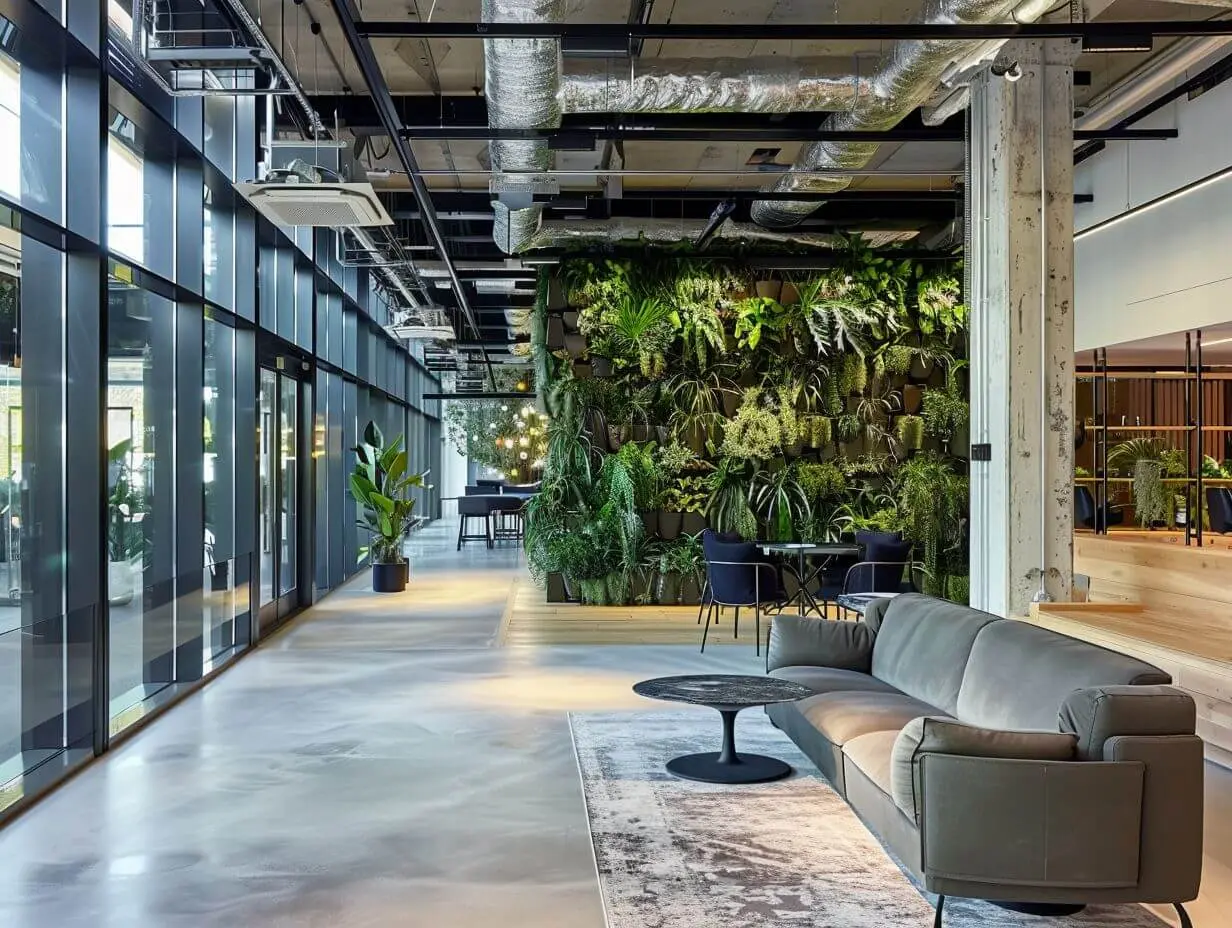
- Targeted indoor planting with a maintenance plan
- Reconfiguration to improve daylight distribution
- Selective material substitutions
Moderate investment
- Garden integration and outdoor classroom provision
- Daylight retrofitting and glare control upgrades
- Acoustic upgrades in teaching spaces
Higher investment
- Structural redesign and site re-planning
- Climate-responsive orientation strategies in new build
- Integrated ecological systems where operational capacity supports them
Long-term institutional value
Schools serve communities for decades. Long-term value comes from educational outcomes and operational stability.
Improved learning outcomes strengthen long-term institutional value. “Investment in biophilic school design supports sustainability goals, biodiversity integration, and community engagement.
Schools can track impact through:
- Attendance rates
- Behavioural incident reports
- Attainment trends over time
- Teacher retention
- Student wellbeing surveys
- Indoor environmental quality monitoring where available
Common misconceptions
- It is only for rural schools. Urban schools often benefit most due to limited daily outdoor access.
- Plants are enough. Effective outcomes depend on daylight, ventilation, acoustics, and spatial design.
- It is too expensive. Layered integration during planned upgrades reduces cost impact.
FAQs
What is biophilic design in schools?
It is the integration of daylight, nature views, outdoor access, indoor environmental quality, and supportive spatial layouts to improve learning conditions and wellbeing.
Does biophilic design improve academic performance?
Research commonly links daylight, nature views, and improved air quality with better focus, attendance, and learning progress, although results vary by context and implementation quality.
What matters most: daylight or ventilation?
Both. Daylight supports circadian alignment and alertness, while ventilation and air quality influence fatigue and cognitive function. The strongest outcomes come from combining both with acoustic comfort.
How do UK regulations affect biophilic school design?
UK delivery must align with Building Bulletin guidance for ventilation, Building Regulations for energy and overheating risk, safeguarding requirements, and often BREEAM Schools criteria.
Key takeaways
- Nature views and outdoor access support attention restoration and emotional regulation.
- Daylight and glare control support circadian alignment and classroom alertness.
- Ventilation and air quality influence cognitive function and fatigue.
- Acoustic comfort reduces stress and improves comprehension.
- UK success depends on compliance, safeguarding, maintenance, and measurable monitoring.
How can schools measure impact?
Schools can track attendance, behaviour incidents, attainment trends, teacher retention, student wellbeing surveys, and indoor environmental monitoring where available.
Useful Links
Conclusion
Biophilic design in schools supports academic performance, reduces stress, improves air quality conditions, stabilises circadian timing, and strengthens long-term institutional value when implemented with compliance and maintenance in mind.
Educational architecture is an environmental system that shapes wellness, engagement, productivity, and long-term institutional sustainability. They are cognitive environments. Design influences performance.