





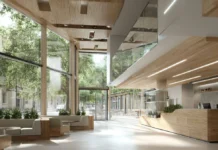
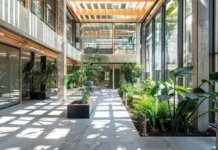

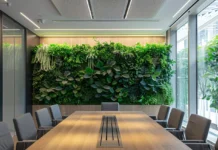
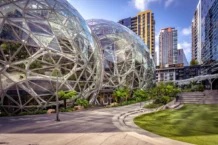
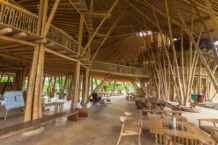
Biophilic office design improves workplace performance by increasing meaningful exposure to nature within the daily work environment. It does this through daylight, nature views, greenery, sensory comfort, spatial psychology, and controlled environmental variability.
In talent and innovation markets, office environment has become a measurable performance variable rather than a cosmetic choice.
Built office environment influences employee cognitive performance in the workplace.
This guide covers the performance science, common measurable outcomes, a practical ROI model, and UK delivery constraints.
Quick summary
Biophilic office design uses daylight, nature views, greenery, spatial layouts such as prospect and refuge, and improved indoor environmental quality to reduce stress and cognitive fatigue. Studies often associate nature exposure with attention restoration, while better daylight and ventilation are linked to improved alertness and cognitive performance.
ROI is typically modelled using productivity gains, absenteeism reduction, retention improvement, and leasing value. In the UK, retrofit constraints, lease conditions, urban density, and compliance requirements such as Part L energy performance and overheating risk shape what is feasible. The highest-impact strategies are usually daylight and glare control, air quality improvements, distributed planting, and focused restorative spaces.

Why office environments affect performance
Humans spend a large proportion of time indoors. Modern offices often include artificial lighting, limited daylight, poor air quality, static thermal conditions, and minimal natural stimulus. These conditions contribute to cognitive fatigue, reduced focus, elevated stress, and lower job satisfaction.
Indoor environmental quality influences attention and stress response.
The productivity case for biophilic offices
Cognitive performance and attention
Attention Restoration Theory suggests that natural stimuli help restore directed attention after sustained focus. Biophilic environments can support this through nature views, coherent complexity, and sensory variety.
Natural environmental cues like water features and foliage restore executive function.
Workplace studies often report perceived improvements in concentration where daylight and nature views are present. Some organisations cite productivity uplifts in the 6 to 15 percent range, but effect size depends on baseline conditions, work type, and measurement method.
Reduced absenteeism
Stress-related absence can create material cost through lost output and disrupted continuity. Nature exposure and improved workplace comfort can reduce stress activation and improve perceived environmental quality.
Biophilic office design reduces stress-induced absenteeism, which creates labour cost savings and improves team stability and morale.
Engagement and retention
Workplace satisfaction is influenced by comfort, perceived support, and environmental quality. Biophilic strategies can increase psychological comfort and perceived organisational investment.
Perceived environmental quality increases employee retention.
Turnover cost is often substantial when recruitment time, training, and ramp-up are included. Retention improvements improve financial performance over time.
Daylight and circadian performance
Light is a biological regulator. Daylight exposure supports and regulates circadian rhythm and timing, which influences sleep quality, mood stability, and daytime alertness.
Offices with usable daylight and glare control often report reduced fatigue and better afternoon performance. In practice, daylight strategy must balance comfort with overheating and energy performance requirements.
Air quality and cognitive clarity
Indoor air quality influences fatigue and decision speed. Research often links higher ventilation rates and lower CO2 concentrations with improved cognitive test performance.
Improved indoor air quality enhances cognitive clarity. Ventilation performance reduces CO2 concentration. Lower CO2 concentration supports cognitive endurance.

Quantifying ROI: a practical framework
Biophilic investment is usually evaluated through four main levers:
- Productivity gain
- Absenteeism reduction
- Retention improvement
- Leasing and asset value effects
Example ROI logic
Scenario model, not a guarantee:
- Annual salary: £50,000
- Illustrative productivity gain: 6 percent
- Implied value: £3,000 per employee per year
- Illustrative implementation cost: £1,000 per employee
Productivity gain offsets capital investment when gains are measurable and sustained.
Best practice is to validate with post-occupancy evaluation, HR metrics, and indoor environmental monitoring rather than relying on assumed uplifts.
Real estate and asset value implications
Office demand often follows comfort, health positioning, and user experience. Buildings with strong daylight, high indoor environmental quality, and visible wellbeing features can achieve higher occupancy and retention where market conditions support it.
Health-focused office environments increase leasing attractiveness.
Certification frameworks can support this narrative. WELL focuses on health outcomes and BREEAM provides sustainability assurance in UK offices. Some projects stack both to strengthen market positioning.
Biophilic office design strategies
Effective delivery uses layered integration rather than isolated features.
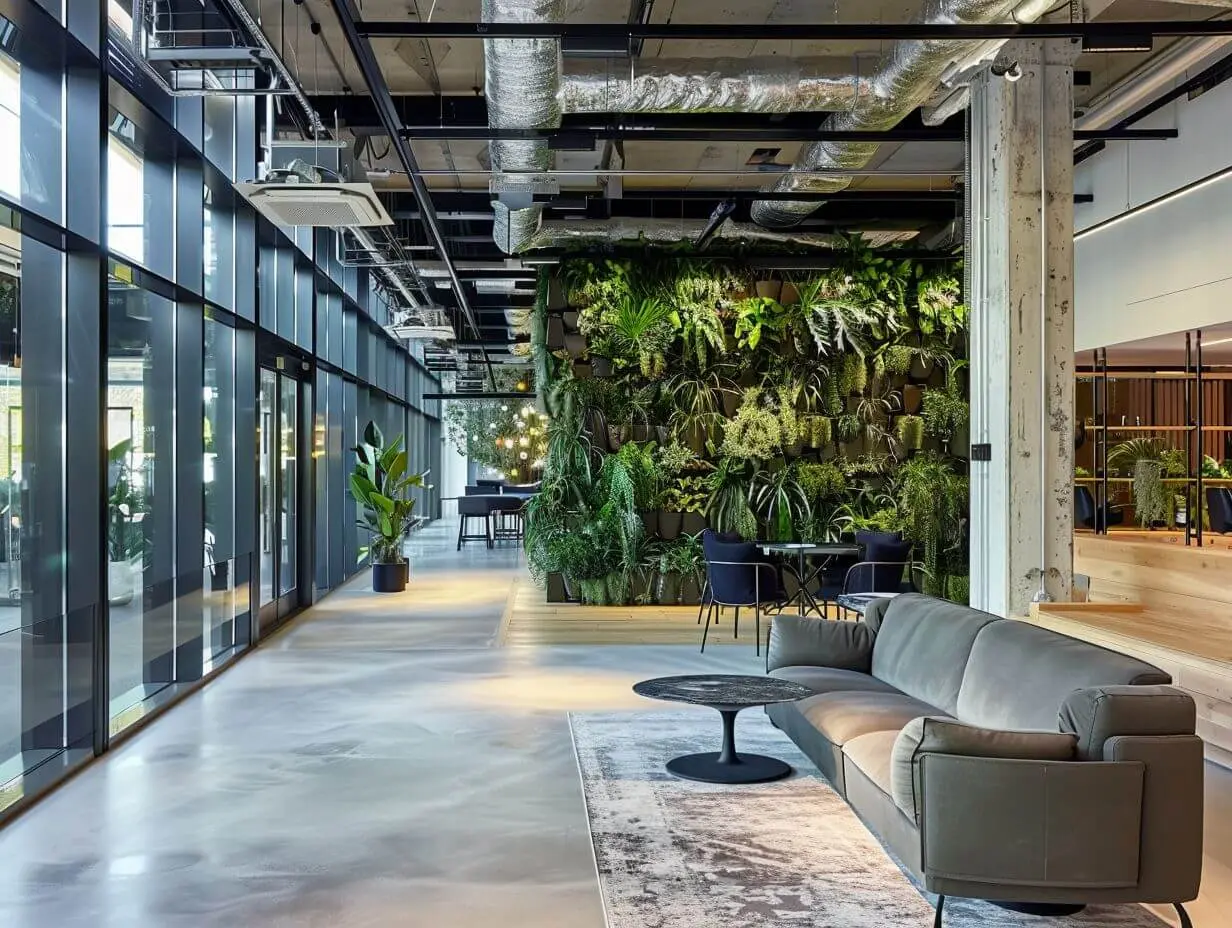
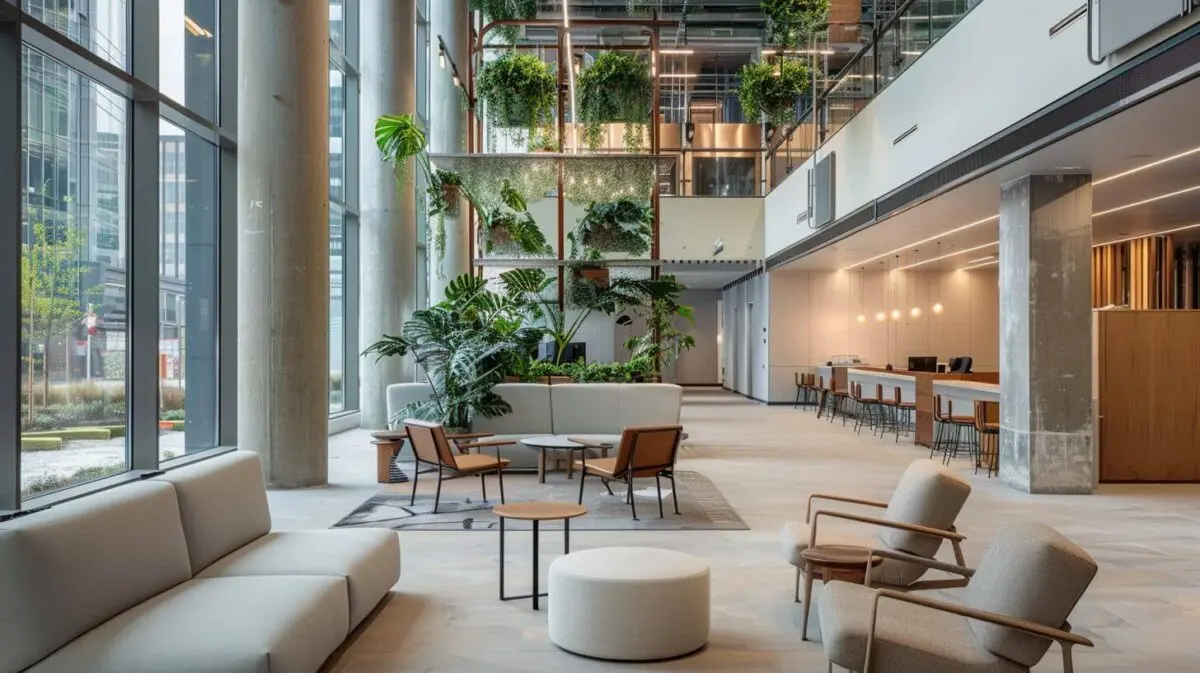
- Visual connection with nature: tree views, courtyard sightlines, internal planting, terraces
- Dynamic and diffuse light: daylight distribution, glare control, circadian-supportive lighting where needed
- Natural materials and textures: timber, stone, tactile finishes used appropriately
- Prospect and refuge: open collaborative zones paired with focus pods and quiet corners
- Thermal and airflow variation: mixed-mode ventilation where feasible, operable windows, zoning
Layering patterns increases performance impact compared with single interventions.
Talent markets and employer brand
Employees increasingly evaluate workplace quality. Environments that support comfort, health, and restoration contribute to employer differentiation.
Biophilic workplace design strengthens employer brand perception.
Risk mitigation and resilience
Some biophilic strategies overlap with passive design. Natural ventilation potential, daylight optimisation, and climate-responsive architecture can increase resilience and reduce reliance on mechanical systems where safe and compliant.
Passive overlap reduces energy dependency and supports resilience.
Common misconceptions about ROI
- It is too expensive. Many high-impact strategies are low cost, especially when planned early.
- Plants alone solve it. Plants help, but performance depends on daylight, air quality, acoustics, and layout.
- Benefits are subjective. Outcomes can be tracked through surveys, absence data, retention, and IEQ monitoring.
UK implementation considerations
In the UK, biophilic office delivery is shaped by retrofit conditions, particularly in London and other dense cities. Existing façades, lease arrangements, and envelope performance can limit structural changes.
UK retrofit office stock limits structural biophilic interventions.
UK strategies often focus on:
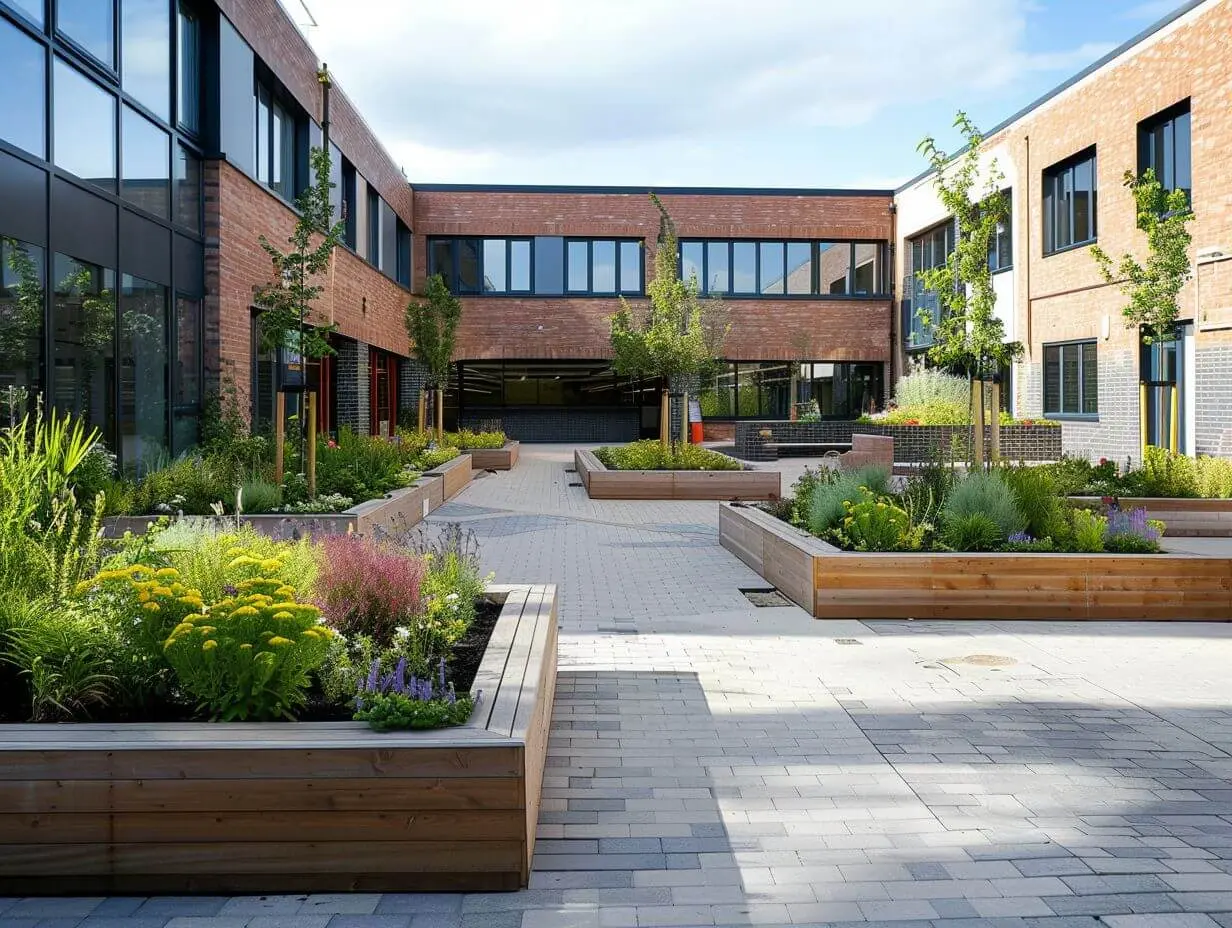
- Internal courtyard activation and light wells
- Roof terraces and winter gardens
- High-performance glazing upgrades where feasible
- Interior planting and material respecification
- Acoustic comfort improvements and restorative spaces
BREEAM remains the dominant UK sustainability framework. Many biophilic strategies contribute to Health and Wellbeing, Daylighting, and Indoor Environmental Quality credits. WELL is increasingly layered onto BREEAM in prime office markets.
BREEAM and WELL stacking strengthens UK office market positioning.
Urban density and overshadowing can limit daylight. Daylight strategy should be modelled with glare control and thermal performance in mind. Energy and overheating constraints affect how glazing, shading, and ventilation are specified.
FAQs
What is biophilic office design?
It is the integration of daylight, nature views, greenery, sensory comfort, and supportive spatial layouts into workplaces to improve wellbeing and performance.
Do biophilic offices increase productivity?
Studies often associate nature exposure and improved indoor environmental quality with better focus and perceived performance. Some organisations cite productivity uplifts, but results depend on baseline conditions and measurement approach.
How do you calculate ROI for biophilic offices?
ROI is usually modelled using productivity value, absenteeism reduction, retention improvement, and leasing impacts. The strongest cases combine HR metrics with post-occupancy evaluation and IEQ monitoring.
Are plants enough to deliver results?
No. Plants help, but measurable outcomes usually require layered strategies including daylight and glare control, ventilation and air quality, acoustics, and restorative layouts.
What are the main UK constraints?
Retrofit façades, lease arrangements, urban density, and compliance requirements for energy performance, overheating risk, and ventilation shape what is feasible. BREEAM and WELL are often used to structure delivery and evidence.
Key takeaways
- Biophilic design can improve office performance by reducing stress and cognitive fatigue.
- Daylight and ventilation influence alertness, sleep quality, and cognitive clarity.
- Layered pattern integration outperforms single features such as plants alone.
- ROI is usually driven by productivity, absenteeism, retention, and asset value.
- UK retrofit delivery depends on lease constraints, urban density, and compliance modelling.
Conclusion
Biophilic design in offices can deliver measurable improvements in focus, stress reduction, engagement, retention, and long-term asset value when interventions are integrated and measured.
Biophilic design is not decorative. It is performance infrastructure for knowledge work.