









Home UK
UK
Biophilic Design in the UK
Biophilic design is universal in principle, but implementation in the United Kingdom is shaped by regulation, climate, planning policy, and a predominantly retrofit building stock.
This section examines how nature-integrated architecture functions within the UK’s specific legal and environmental framework.
The UK Context
Delivering biophilic design in the UK requires alignment with:
- BREEAM sustainability assessment criteria
- Biodiversity Net Gain (BNG) requirements
- Building Regulations such as Part L (Energy), Part O (Overheating) and Part F (Ventilation)
- Urban density constraints
- Heritage and conservation limitations
- Limited winter daylight conditions
Biophilic strategies must operate within these constraints rather than alongside them.
Climate & Daylight Considerations
The UK climate presents unique design challenges:
- Short winter daylight hours
- Overcast conditions
- Seasonal variation in solar gain
- Overheating risk in summer
Effective biophilic integration therefore requires:
- Careful daylight optimisation
- Glazing strategy
- Solar shading
- Mixed-mode ventilation
- Material selection supporting thermal comfort
Biophilic design in the UK is often about maximising natural light responsibly, rather than simply adding greenery.
Retrofit-Heavy Building Stock
Unlike rapidly expanding urban regions, much of the UK built environment consists of:
- Existing commercial buildings
- Post-war institutional stock
- Heritage-protected structures
This makes retrofit strategy central.
Biophilic interventions in UK contexts frequently focus on:
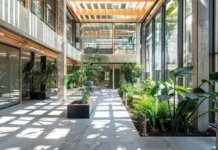
- Internal courtyards
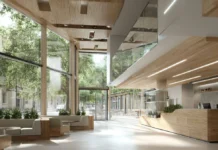
- Light wells
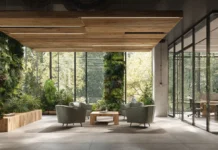
- Indoor planting systems
- Material upgrades
- Improved visual connection to landscape
- Rooftop greening
Retrofitting biophilic principles requires balancing cost, compliance, and structural limitations.
Regulatory Alignment
Biophilic strategies often intersect with:
- BREEAM Health & Wellbeing credits
- BNG landscape planning
- Overheating mitigation under Part O
- Ventilation requirements under Part F
While biophilic design is not a statutory requirement, it can complement compliance pathways when integrated strategically.
Sector-Specific Application
Within the UK, biophilic implementation varies by sector:
- Offices focus on productivity and retention
- Schools prioritise ventilation and daylight standards
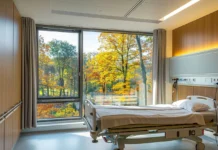
- Healthcare environments integrate NHS guidance and infection control
- Urban developments balance density with landscape integration
Each context requires tailored interpretation.
Explore UK-Focused Articles
This section includes analysis on:
- Biophilic design strategy within UK regulations
- Cost and retrofit considerations
- Certification alignment
- Sector-specific UK case analysis
Biophilic design must respond to local realities. In the UK, regulatory awareness and climate sensitivity define effective delivery.