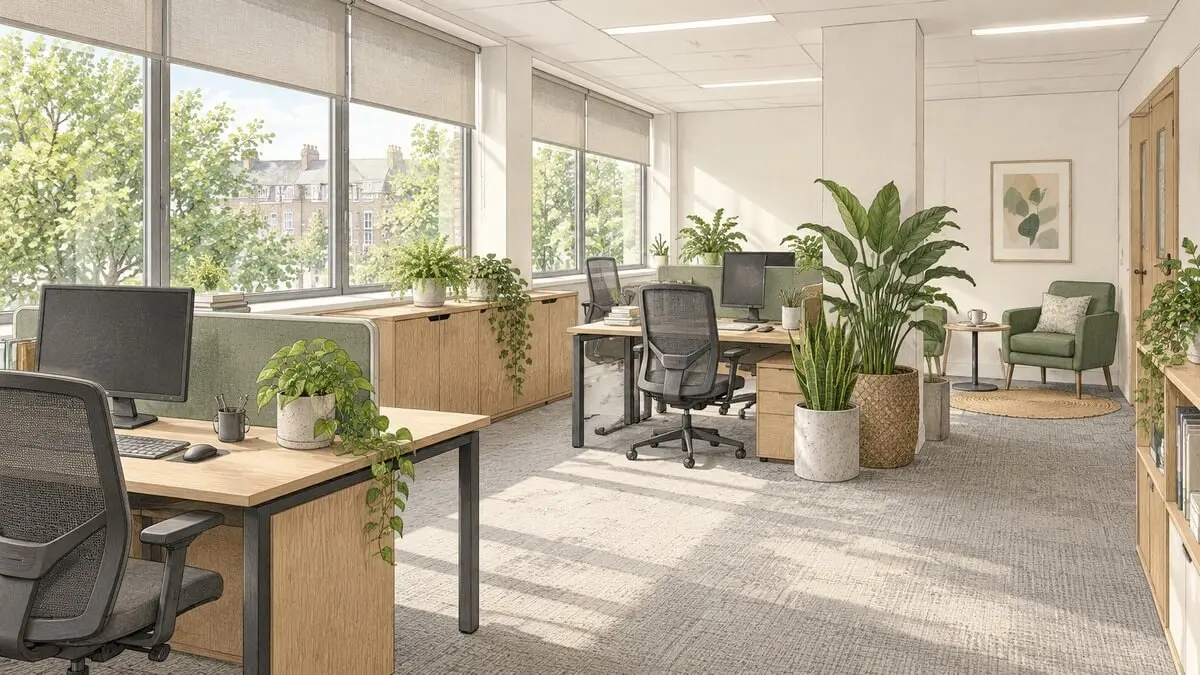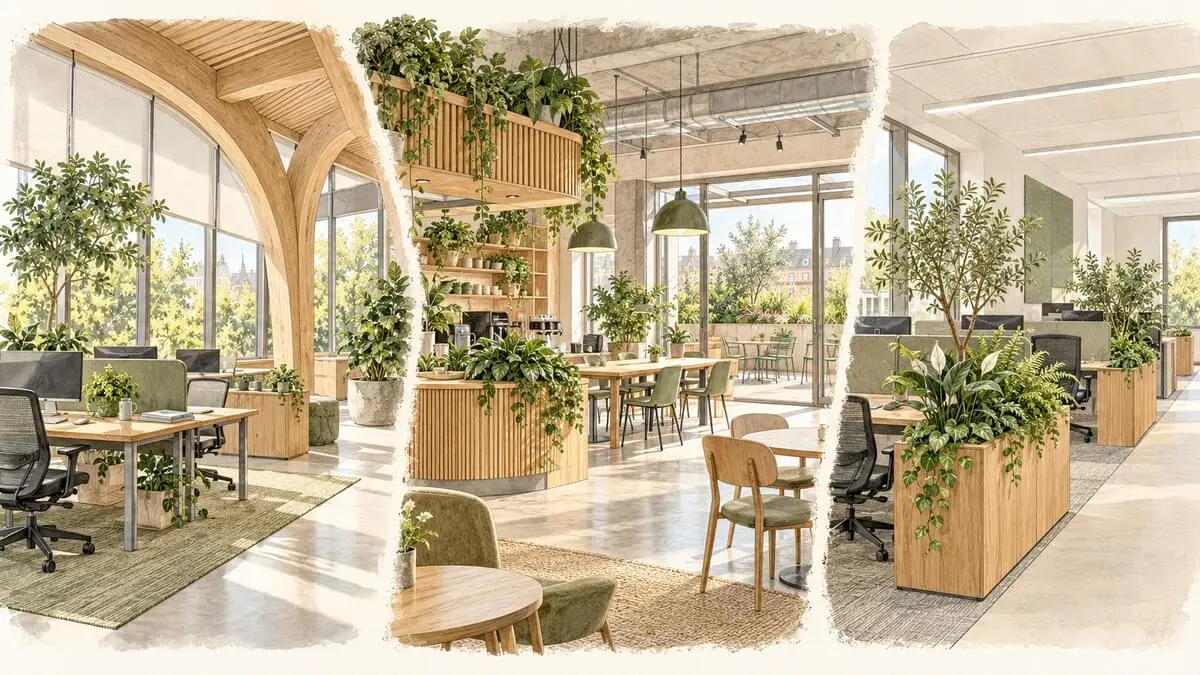













Low-light office plants can bring greenery closer to desks and shared spaces, but the right choice depends on the conditions at the plant’s position and the care available. A plant described as shade-tolerant still needs usable light. A windowless meeting room with the lights switched off for long periods is a different proposition from a north-facing office.
This guide helps UK office managers, facilities teams and small businesses choose a manageable planting scheme. Start with the space, choose plants to suit it, and agree who will keep them healthy. For the wider project, use our UK office retrofit checklist.
Quick answer: which plants should you consider?
For a shortlist, consider cast-iron plant, ZZ plant, snake plant, Chinese evergreen, golden pothos and parlour palm. They suit different positions and care arrangements: there is no single best plant for every office. The RHS office plant guide identifies ZZ plant, snake plant and Chinese evergreen among its low-light options.
Before ordering: trial a small number in their intended positions. A healthy plant beside a window does not demonstrate that the same species will perform well at the back of the room.
Check the office before choosing plants
- Assess each proposed position. Note daylight, shading, window orientation and the hours artificial lighting operates. Check the actual shelf or floor position rather than relying on how bright the room feels from the doorway.
- Review winter conditions. Shorter UK days, closed blinds and changes to heating can alter the environment. Record what happens overnight, at weekends and over Christmas closures.
- Look for local problems. Avoid putting a planter directly beside a radiator, in a draught or under an air-conditioning outlet. Agree positions with the people who use the space.
- Check practical access. Someone must reach the compost, lift the inner pot where necessary and clean up without moving heavy furniture. Leave circulation routes and access to controls clear.
- Decide who owns care. Choose a named person or maintenance contractor, plus a holiday backup, before buying.
These are proposed checks for planning your scheme, rather than a lighting specification. For difficult or large installations, ask an interior landscaper to assess the positions and propose suitable plants and maintenance.
Six low-light office plants compared
| Plant | Position to consider | Decision to make before buying |
|---|---|---|
| Cast-iron plant Aspidistra elatior | A shaded or filtered-light position with room for broad leaves. | Check temperatures as well as light. Do not interpret its toughness as permission to leave compost waterlogged. |
| ZZ plant Zamioculcas zamiifolia | A low-light position where an upright foliage plant fits the layout. | Agree how moisture will be checked before watering; avoid automatic top-ups by several colleagues. |
| Snake plant Dracaena trifasciata, also sold as Sansevieria trifasciata | A position where upright leaves can stay clear of passing people. | Allow for the mature plant rather than just the nursery pot’s footprint. |
| Chinese evergreen Aglaonema | A desk-side or shared-area display selected for its actual light conditions. | Ask the supplier which cultivar suits the position; do not assume every coloured or variegated form has identical requirements. |
| Golden pothos Epipremnum aureum | A shelf or supported display where trailing growth can be managed. | Plan access for care and keep stems away from screens, equipment and circulation routes. |
| Parlour palm Chamaedorea elegans | A lower-light area with sufficient room for the foliage. | Check available width and access for watering before selecting the pot size. |
The RHS Aspidistra guide describes its preference for low or filtered light and warns against overwatering. Its shady-room guide includes golden pothos, while noting that it is less shade-tolerant than aspidistra. Parlour palm appears in the RHS selection for low light and fluctuating temperatures. Use those growing guides alongside the instructions supplied with your plants.

What about an office with no windows?
Do not treat “low light” as “no light”. If the proposed position has no useful daylight, check whether the installed lighting provides suitable conditions for the selected plants and for how long it operates. A lighting assessment may be needed; ordinary office lighting should not automatically be assumed sufficient.
If suitable plant lighting cannot be provided, choose another way to improve nature contact. A usable view towards outdoor greenery, natural materials or nature imagery may be more practical. These are different interventions, not substitutes for every benefit of living plants. Our guide to the patterns of biophilic design explains the wider options.

A workable care checklist
Use the schedule below as a proposed inspection routine. An inspection is not an instruction to water. Follow the needs of the species, container and growing conditions.
- At handover: label each plant, record its position and obtain care instructions. Confirm drainage arrangements and protection for floors, furniture and nearby electrical equipment.
- During routine checks: inspect compost moisture as instructed, foliage condition, standing water, pests and any movement from the agreed position. Record what was done.
- When watering is needed: follow the plant-specific instructions and check that surplus water cannot remain unnoticed inside a decorative outer container.
- As needed: clean dusty foliage appropriately and remove damaged material. Report continuing deterioration rather than repeatedly adding water or fertiliser without a diagnosis.
- Before absences: hand over the care log to a named backup. Arrange access or contractor visits for longer closures.
- At seasonal reviews: reassess light, heating and watering needs. Review any losses and adjust the scheme before ordering replacements.
A simple log can use five columns: plant and location; check date; observation; action; person responsible. Give colleagues a clear way to report a problem without watering the plant themselves.
Plan for people, pets and the working layout
Check the suitability of the exact species for your workplace, including the possibility of ingestion, skin contact and access by visiting children or office dogs. Do not assume a decorative houseplant is edible or pet-safe. Ask the supplier for relevant handling and safety information before selection.
Keep planters clear of escape routes, accessible circulation space and equipment. Consider how cleaning staff will work around them and whether tall, heavy or trailing displays require specialist installation. Obtain permission where planting affects a leased office or shared building.
Do office plants clean the air?
Do not specify ordinary potted plants as a replacement for ventilation or pollutant control. A review by Cummings and Waring found that VOC removal measured in small chambers did not translate into a practical air-cleaning benefit from typical numbers of passive potted plants in buildings. Engineered active systems are a separate question.
Give your planting scheme a realistic purpose: for example, making greenery visible from a shared work area or improving how a break space is experienced. Avoid promising a fixed productivity increase from a particular number of pots.
Budget for keeping the plants, not just buying them
Ask for an itemised quotation covering plants, containers, delivery, installation, ongoing visits and replacements. Clarify whether VAT is included and who pays for losses. Compare the same scope when considering purchased plants, rental arrangements or a maintained service.
For a small pilot, record plant positions, installation costs, care time, replacements and staff feedback. Use that information to decide whether to expand. Our worked UK biophilic design budgets show how planting fits into a wider project.
Frequently asked questions
Which office plant needs no maintenance?
No living office plant needs no maintenance. Even a resilient species needs suitable conditions, checks and occasional care. Match the scheme to the time and skills available.
Should office plants be watered every Friday?
A regular check can be useful, but watering every plant on a fixed day regardless of moisture or species can cause problems. Assign responsibility and follow the individual care instructions.
Can we start with a few plants?
Yes. Trial a small scheme in the positions you actually want to use, monitor its condition and record maintenance. Expand when you understand what works in your building.
What should we read next?
Use our UK office case studies to explore how planting works alongside daylight, materials and spatial planning. Then use the retrofit checklist to turn your preferred approach into a manageable brief.
Further Reading